If you’ve seen this headline circulating, here’s the story behind it — and why the plaintiffs say it’s a bigger deal than just another vaccine lawsuit.
What actually happened
On January 21, 2026, Children’s Health Defense (CHD) filed a federal lawsuit against the American Academy of Pediatrics (AAP), the largest U.S. pediatric trade group, in the U.S. District Court for the District of Columbia. CHD — founded by Robert F. Kennedy Jr., who now serves as U.S. Secretary of Health and Human Services — was joined by five other plaintiffs, including two physicians, Dr. Paul Thomas and Dr. Kenneth Stoller, who say their medical careers were damaged for raising questions about AAP’s vaccine guidance, along with parents of children who they say died or were injured after routine vaccinations.
The lawsuit invokes RICO — the Racketeer Influenced and Corrupt Organizations Act — a federal statute written to prosecute organized crime, later used to take down the tobacco industry. The plaintiffs’ attorney, Rick Jaffe, says that comparison is the point: earlier vaccine litigation challenged individual shots or sought compensation for individual injuries, but this case argues the AAP ran a pattern of fraud over decades, the same kind of sustained, organization-wide deception that ultimately exposed tobacco companies for manufacturing doubt about their products’ risks. As Jaffe put it, tobacco created false uncertainty to dodge scrutiny — the plaintiffs argue the AAP did the inverse, manufacturing false certainty to shut scrutiny down before it could start.
What the lawsuit alleges
This is the plaintiffs’ case, laid out in their complaint — a court has not yet ruled on any of it, but here’s the argument they’re making:
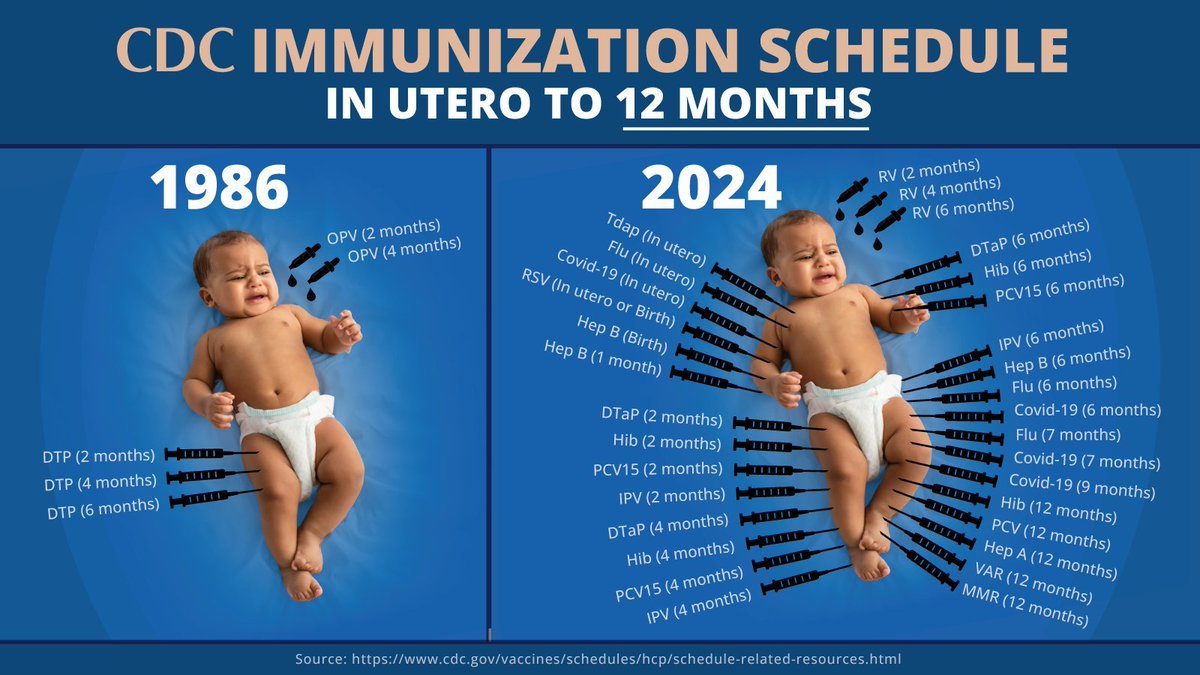
- The AAP promoted the childhood vaccine schedule as thoroughly safety-tested, even though no studies have ever directly compared health outcomes between vaccinated and unvaccinated children — a real and significant gap the plaintiffs argue parents were never told about.
- That claim of safety rests on what the suit calls a “foundational fraud”: a 2002 paper used to justify giving infants numerous vaccines simultaneously, which the plaintiffs argue was never backed by real clinical evidence.
- The AAP received funding from vaccine manufacturers and built in financial incentives for pediatricians who hit high vaccination rates — incentives the plaintiffs say were never adequately disclosed to the families relying on AAP’s guidance.
- Physicians who questioned the vaccine schedule, including the plaintiff doctors, were professionally targeted and disciplined, which the suit frames as the AAP enforcing compliance rather than engaging with legitimate scientific debate. Dr. Stoller, for example, lost his medical licenses in California and New Mexico after granting medical exemptions to vaccine mandates.
CHD CEO Mary Holland argues the AAP has been treated as an untouchable scientific authority for decades without earning that trust through actual proof: “the AAP ‘is a front operation in a racketeering scheme involving Big Pharma, Big Medicine and Big Media.'”
AMERICAN ACADEMY OF PEDIATRICS HIT WITH FEDERAL RICO LAWSUIT FOR VACCINE SAFETY FRAUD
— Nicolas Hulscher, MPH (@NicHulscher) June 27, 2026
This RICO enterprise illegally deceived parents for DECADES into injecting their children with large batteries of untested vaccines.
The AAP rakes in money from Pfizer, Moderna, and Merck to… https://t.co/azRLT9DORD pic.twitter.com/lrSEeQsG52
The case leans on real findings from the Institute of Medicine (now the National Academy of Medicine), which in both 2002 and 2013 called for more research and acknowledged that no studies had compared health outcomes between vaccinated and unvaccinated children — a gap the plaintiffs say the AAP downplayed for over twenty years while telling parents the science was settled.
The plaintiffs are asking the court for monetary damages, an order forcing the AAP to disclose the lack of comprehensive safety testing, and a bar on the AAP making further “unqualified” safety claims.
Why this case is different
Worth noting: this isn’t the only legal fight currently playing out over vaccine policy. The AAP itself has separately sued federal health officials over changes to vaccine recommendations, and Texas Attorney General Ken Paxton has opened a state investigation into financial incentives tied to childhood vaccine recommendations — part of a broader reckoning the plaintiffs argue is finally catching up to an institution that’s gone unquestioned for too long.
Because this is a freshly filed complaint rather than a resolved case, the AAP has not yet had its formal response addressed by the court, and the allegations above are the plaintiffs’ claims rather than judicial findings. If this case advances, discovery could be the first real test of whether the AAP can back up decades of safety assurances with the evidence the plaintiffs say was never there.
This is a developing legal story — check court dockets or established news outlets for updates on motions, rulings, or the AAP’s response.